Namibia packs an improbable amount into one country: the tallest dunes on earth, a salt pan visible from space, a canyon second only to the Grand Canyon, a coast where the desert crashes into the Atlantic, and some of the darkest night skies anywhere. The hard part isn't finding things to do — it's choosing.
Here are the 10 we'd build a first trip around, roughly in the order a route through the country tends to string them together — and if you're still deciding when to come, start with the best time to visit. Each links through to a full guide, so you can go as deep as you like.
1. Climb the great dunes of Sossusvlei and Deadvlei
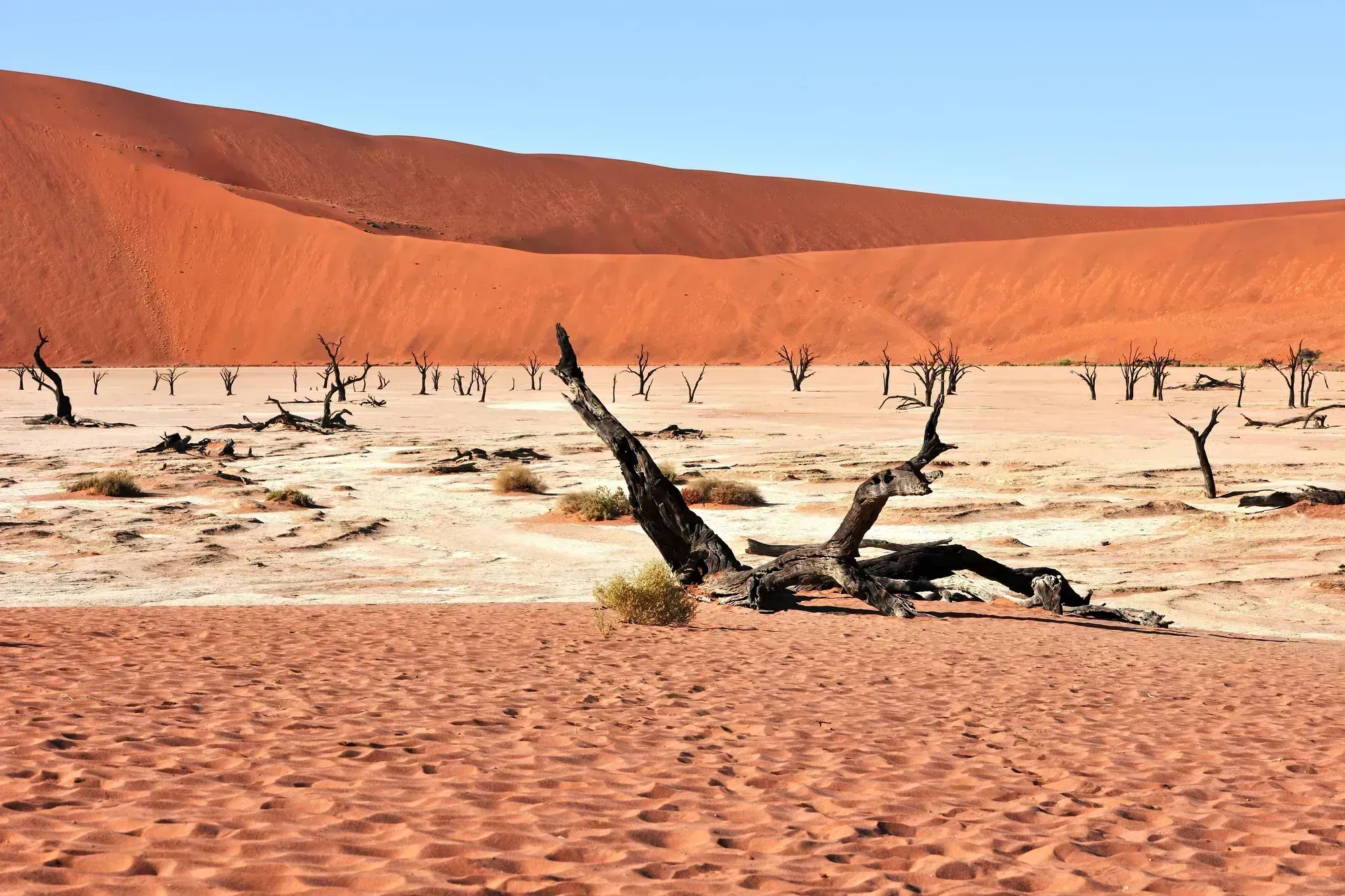
The image most people carry home is Sossusvlei at sunrise — towering red star dunes over 300 metres high, split into clean halves of light and shadow, and the ghostly white pan of Deadvlei with its centuries-old blackened camel-thorn trees, preserved rather than rotted by the bone-dry air. Climb Big Daddy or the roadside Dune 45, walk out across Deadvlei, and cool off in the slot of Sesriem Canyon. It's the essential Namibian day.
2. Go on safari at Etosha
Etosha National Park is one of Africa's great parks, and it does safari differently: you wait at the waterholes and let the wildlife come to you — elephant, lion, giraffe, and one of the best chances anywhere to see black rhino, often at a floodlit waterhole after dark. It's honest to say up front that Namibia isn't a classic Big Five tick-list destination the way Kruger or the Serengeti are — Etosha alone gets you four of the five, with no resident buffalo — but the waterhole format more than makes up for it in how reliable and unhurried the sightings are. How you actually travel a safari here — self-drive, guided or fly-in — is its own decision, covered in our Namibia safari guide.
3. Take a river safari through the Zambezi
Trade dust for water in the lush Zambezi Region, Namibia's north-eastern tail, where the Zambezi, Kwando and Chobe rivers support big elephant herds, hippo, crocodile and more than 400 bird species. Boat cruises and sundowner trips on the water are the classic way to see it, and the region's geography makes it the natural gateway to Botswana's Chobe National Park and, further on, Victoria Falls. It's the one part of Namibia that runs on floodwater rather than rainfall, so ask us about timing if a boat safari specifically is the point of the trip.
4. Track desert-adapted wildlife in Damaraland
Nowhere else does wildlife adapt to scarcity quite like Damaraland does. Elephant here walk vast distances between dry riverbeds to find water, and the neighbouring Palmwag Concession alone holds more than 70% of Namibia's free-roaming black rhino — all of it protected not by fences but by the communal conservancy system, where local communities hold the rights to the wildlife on their own land. Pair it with Twyfelfontein's ancient rock engravings, a UNESCO World Heritage Site since 2007, and the geology of the Brandberg and the Vingerklip.
5. Stand on the rim of Fish River Canyon
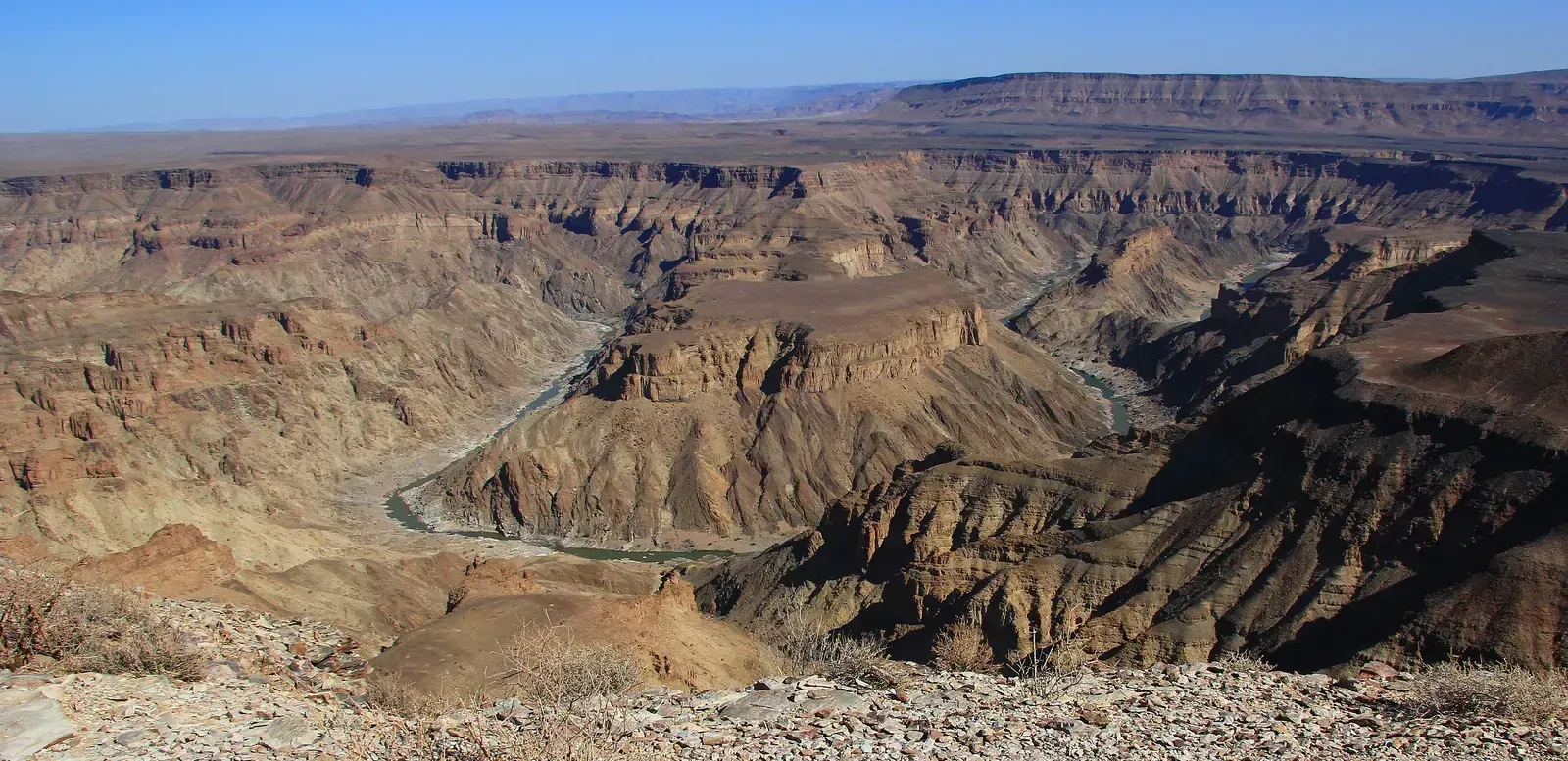
In the quiet far south, the land simply falls away half a kilometre into Africa's largest canyon. Most people take it in from the rim viewpoints at sunrise or sunset, when the walls glow copper; the fit and well-prepared tackle its legendary multi-day hiking trail, open only in the cooler months roughly May to mid-September. Pair it with the surreal Quiver Tree Forest and Giant's Playground nearby.
6. Chase adrenaline on the coast at Swakopmund
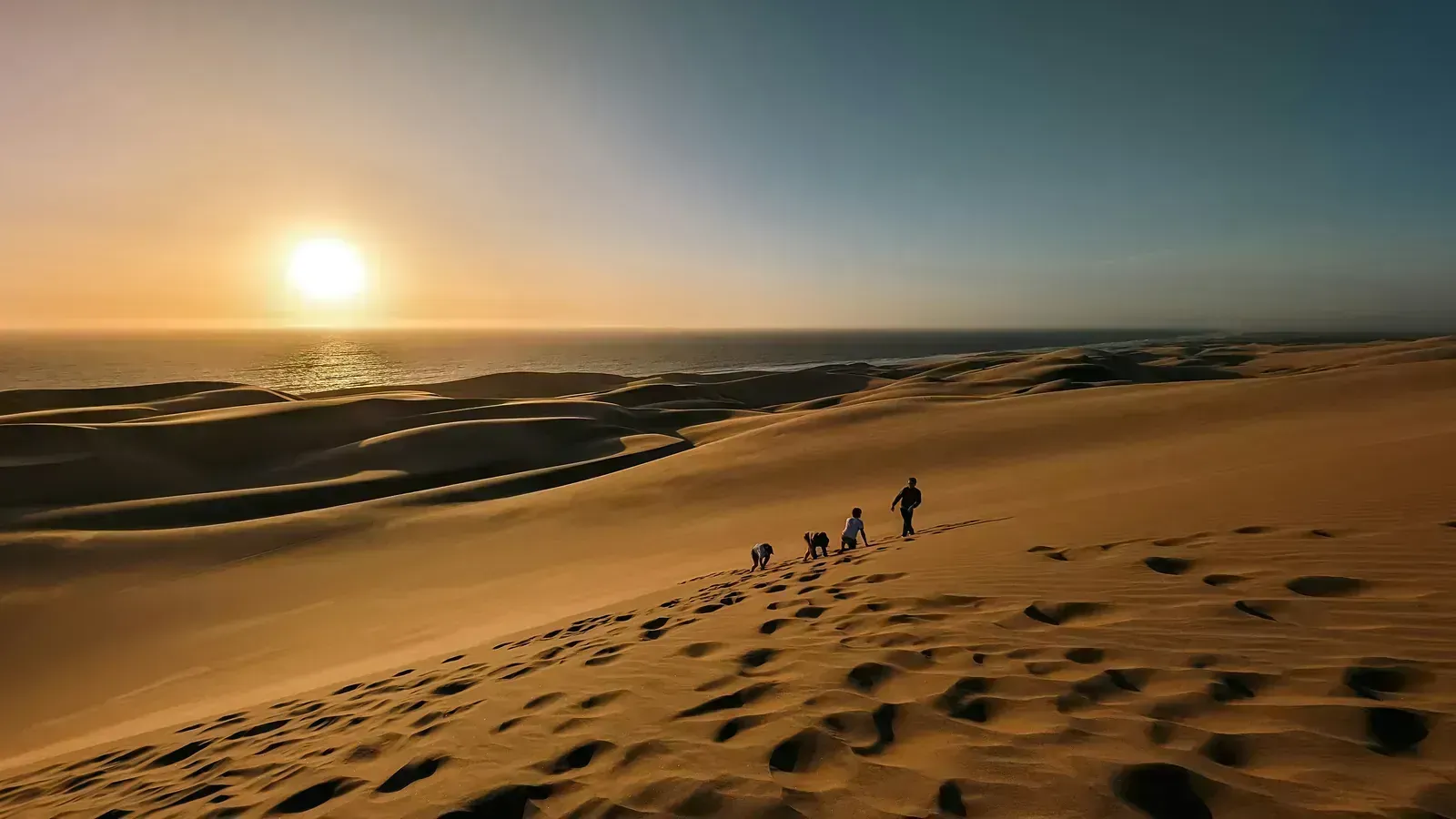
Swakopmund, Namibia's cool coastal adventure capital, is where the dune sea meets the ocean — sandboard, quad-bike or skydive over it, then recover with coffee and strudel in a colonial café. Down the coast, a catamaran cruise from Walvis Bay puts you among dolphins, seals and flamingos, and a guided 4x4 trip to Sandwich Harbour reaches dunes that pour straight into the Atlantic.
7. Wander the ghost town of Kolmanskop
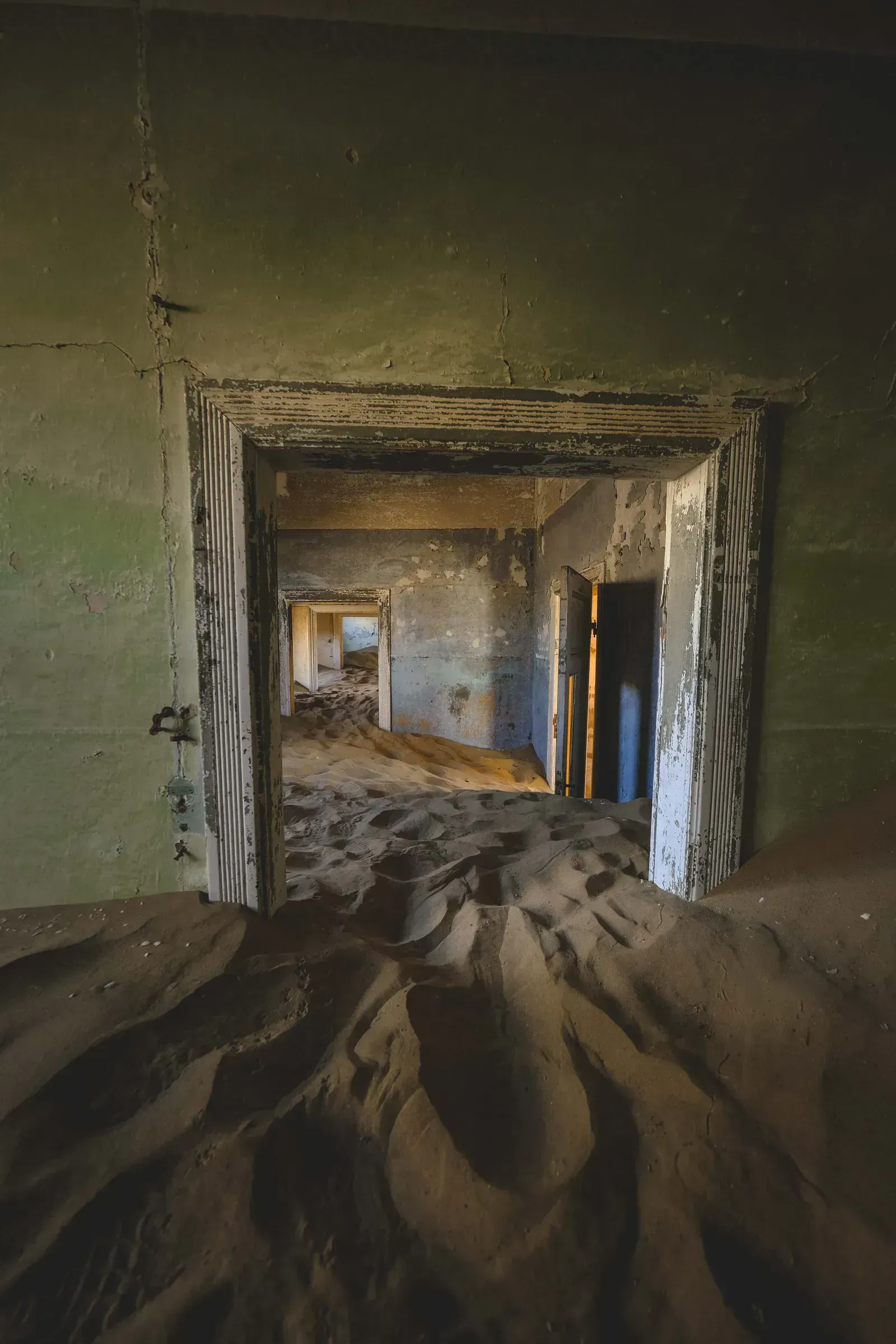
Once a wealthy diamond-mining town, Kolmanskop was abandoned as richer deposits were found further south, and the Namib has spent the decades since reclaiming it — sand dunes now spill through doorways and fill whole rooms of the old German villas. It sits just outside the pastel port town of Lüderitz, on Namibia's wild and little-visited southern coast, which makes a natural pairing for the same day.
8. Stand beneath Spitzkoppe's glowing granite
The bald granite domes of Spitzkoppe — nicknamed the "Matterhorn of Namibia" — glow deep red at dawn and dusk and hold genuinely old San rock art in their overhangs. It's an easy stop between the coast and the north, and one of the best wild-camping settings in the country if you want to sleep under it rather than just visit for the afternoon.
9. Sleep out under an International Dark Sky Reserve
Almost everywhere away from Namibia's towns has strikingly little light pollution, but the NamibRand Nature Reserve, on the edge of the Namib south of Sossusvlei, takes it a step further as one of the very few places on the continent formally certified as an International Dark Sky Reserve. Guided walks and rooftop sky-beds here are built specifically around the night sky rather than treating it as a bonus — worth building an evening around if astronomy or photography is part of why you're coming.
10. Meet the capital and its culture in Windhoek
Most trips begin in Windhoek, the relaxed highland capital — German colonial spires, game restaurants, craft markets, and experience-rich volunteering opportunities with foundations like Na'an ku se. It's the natural place to land, stock up and get your bearings before the open road pulls you north or south.
Common questions
What are the best things to do in Namibia?
Climbing the Sossusvlei dunes and visiting Deadvlei, safari at Etosha, a river safari in the Zambezi Region, tracking desert-adapted wildlife in Damaraland, Fish River Canyon, adventure sports in Swakopmund, the Kolmanskop ghost town, Spitzkoppe, stargazing at NamibRand, and Windhoek's culture — 10 genuinely distinct experiences, not one trip's worth of variations on the same day.
How many days do you need to see Namibia?
Ten to fourteen days lets you comfortably combine the dunes, the coast and a wildlife park without rushing. A week can cover the highlights of one region; three weeks lets you add the far south, Damaraland or the Zambezi Region.
Is Namibia worth visiting?
Very much so. Few countries pack in such variety — the oldest desert on earth, Africa's largest canyon, big-game and river safari, a dramatic coastline and a certified Dark Sky Reserve — all in a safe, uncrowded, self-drive-friendly country.
What is Namibia famous for?
The towering red dunes of Sossusvlei and Deadvlei, Etosha's waterhole safaris, Fish River Canyon, the Skeleton Coast, desert-adapted elephant in Damaraland, the Kolmanskop ghost town, and some of the clearest night skies in the world.
What is the best time to visit Namibia?
The dry season (May to October) is best for wildlife and easy travel, while the green season (November to April) is quieter and greener. See our dedicated guide to the best time to visit Namibia for a month-by-month breakdown.
Plan your Namibia trip
Every Sandura journey is private and built by hand — self-drive, privately guided or fly-in, shaped to how you like to travel and to your budget. Tell us what you're hoping for and we'll come back to you personally.
Plan your trip